Case studies and practice
How to measure the success of a robot activation
· 3 min read
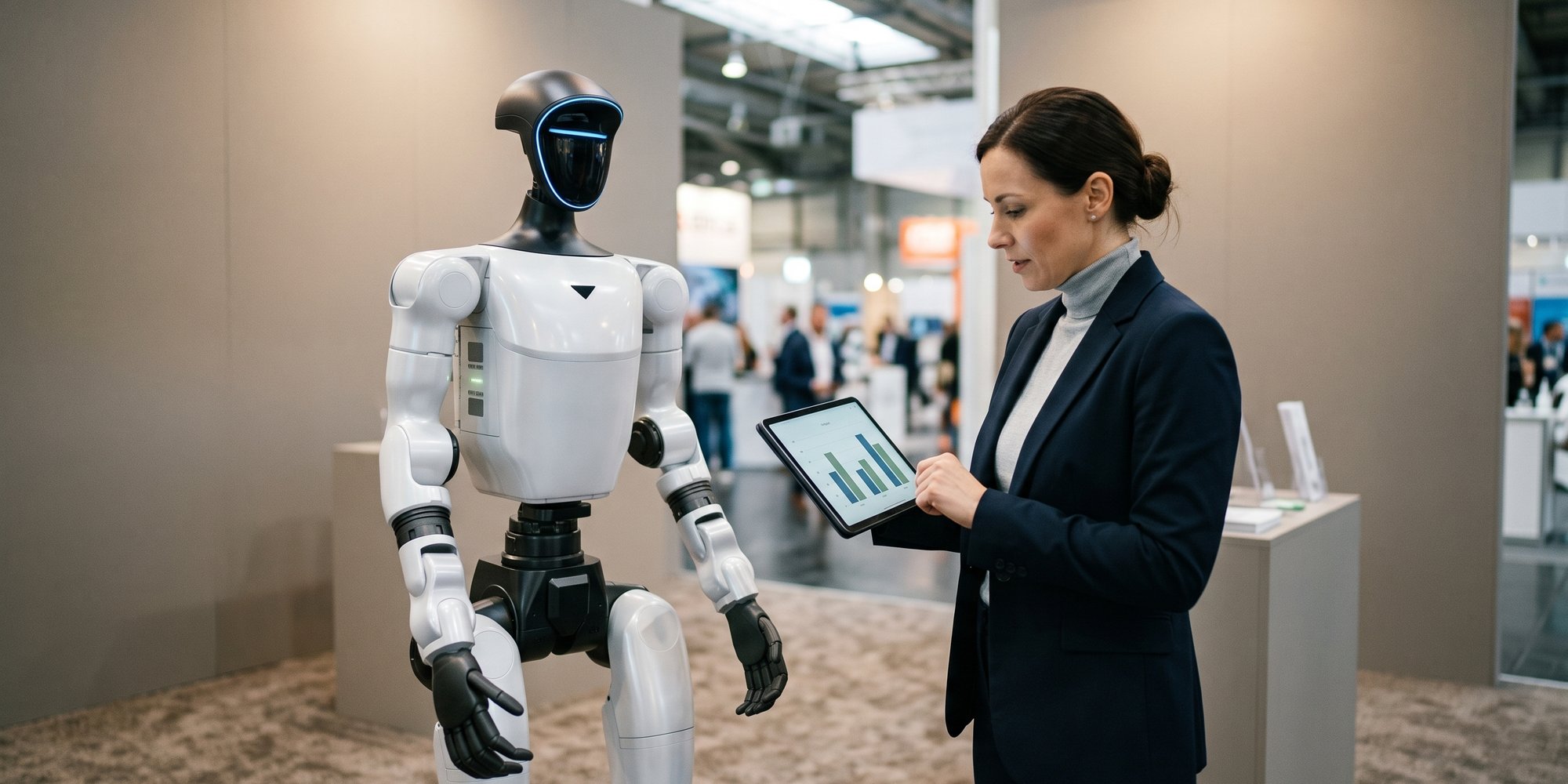
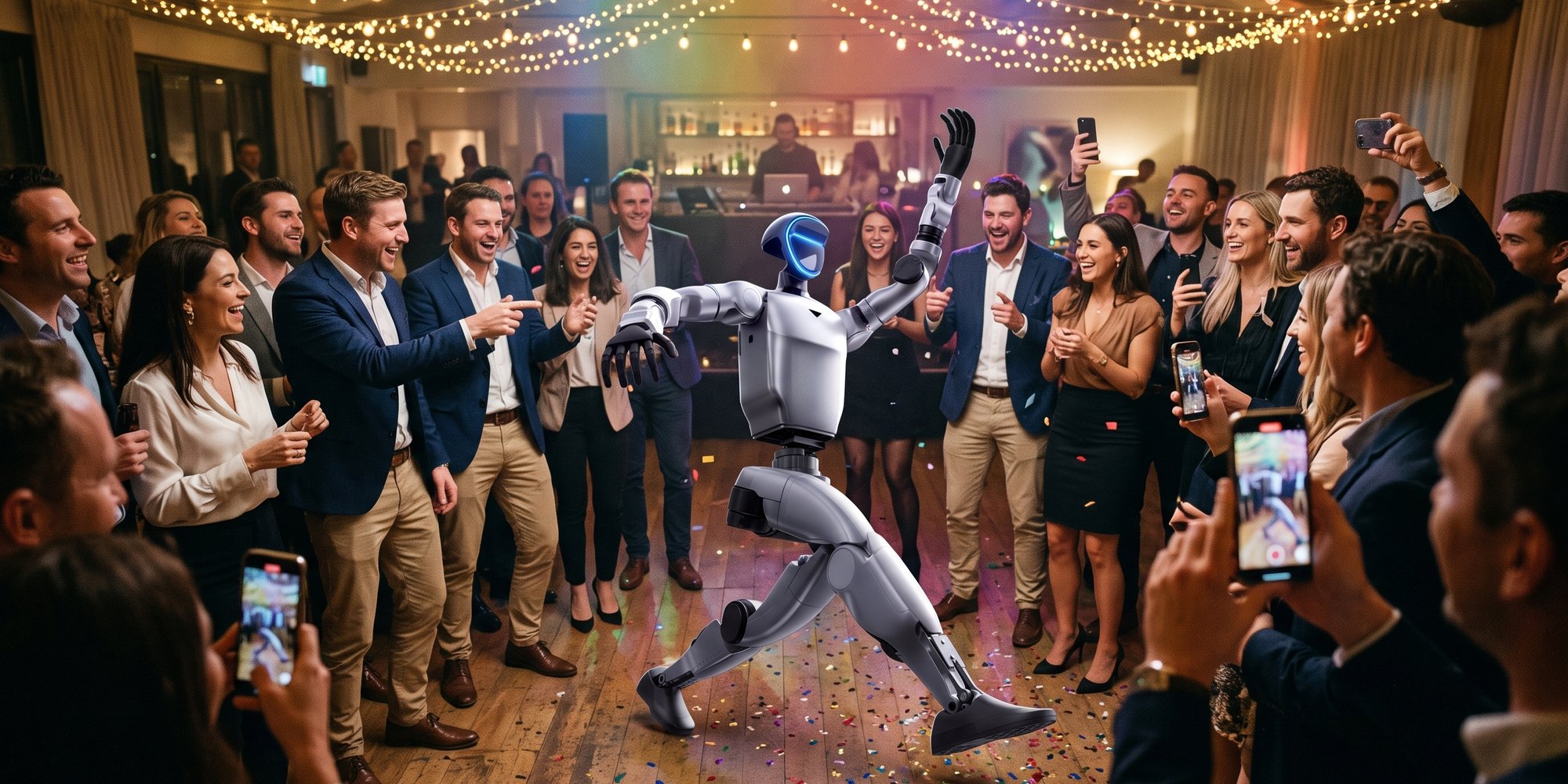
A humanoid robot on a stand draws a crowd, but a crowd on its own is not a result. If you want to defend the budget in front of management and know whether the activation paid off, you need to measure. In this article we look at which metrics really make sense for a robot activation, how to collect them and where measurement has its limits.
What we actually measure in a robot activation
A robot activation is a marketing tool, so it should be evaluated like any other experiential marketing activation. The goal is not the robot itself but the effect it produces: attention, interaction with visitors, shareable content and, ideally, business impact.
That is why we do not measure success with a single number but with a combination of indicators across three levels: attention and reach, quality of interaction and business outcome. Each level tells you something different, and only together do they give a realistic picture of whether the activation met its purpose.
So set a goal before the event. Different metrics matter for a PR event aimed at brand awareness than for a trade fair stand whose job is to collect contacts. Without a clear goal, measurement turns into collecting numbers that nobody can interpret.
Key attention and reach metrics
The first level tells you how many people the robot reached and how far the experience spread. These metrics are the easiest to measure and at the same time the most visible to management.
A traditional experiential marketing metric is dwell time, the average time a visitor spends at the activation. A longer time with the robot usually means deeper engagement and a higher chance that they remember the brand.
- Number of visitors at the stand or in the zone with the robot (foot traffic).
- Dwell time, meaning the average time spent at the activation.
- Reach on social media: impressions, reach, number of shares and brand tags.
- Amount of content created, meaning the photos and videos visitors filmed themselves.
Interaction quality metrics
A big crowd does not yet mean a quality activation. The second level tracks how deeply people interacted with the robot and the brand and what impression they took away.
Here hard data is combined with soft data. The number of photographed interactions or scanned QR codes can be measured precisely, but mood and brand perception can only be captured with a short questionnaire or feedback from staff on site.
- Number of direct interactions between a visitor and the robot or the host next to the robot.
- Brand lift, meaning the change in brand awareness and perception measured with a questionnaire before and after the event.
- Sentiment and qualitative feedback: what people said, what they asked about.
- Share of visitors who moved from watching to active interaction.
Business metrics and return
The third level is the most important for most companies: did the activation bring measurable business impact? This is where the robot activation connects to the sales funnel.
The principle of multiple time windows matters here. Part of the result is visible directly at the event, part only in the weeks after it, when you track the rise in brand searches, website traffic from tagged links and the conversion of collected contacts into opportunities.
- Number of contacts collected: completed forms, scanned badges, booked demos.
- Rise in branded search and website traffic in the days after the event.
- Conversion of contacts into business opportunities and closed deals.
- Cost per contact or per interaction in relation to the activation budget.
How to actually collect data at the event
Measurement does not work unless you prepare it in advance. The most common mistake is that a company wants to evaluate the activation only after the event, when the data can no longer be captured.
The practical tools are simple: QR codes with tagged links for measuring web traffic, a short questionnaire on a tablet, a visitor counter, a photo wall with a hashtag and a designated person who records observations throughout. We recommend always filming a robot activation, because the video is both a result and proof of reach.
- Prepare one main goal and two or three supporting metrics, not ten at once.
- Deploy tagged links and QR codes for accurate measurement of online impact.
- Collect feedback directly on site, not from memory after the event.
- Record the baseline before the activation so you have something to compare against.
Limits and risks of measurement
Measuring a robot activation has real limits and it is fair to admit them. Part of the value, especially awareness building and emotion, cannot be quantified precisely. Brand lift is an estimate, not an accounting entry.
Also beware of mistaking attention for results. A robot reliably draws a crowd, but a big crowd without quality interaction and without a link to a business goal is just a nice photo. Sales attribution is also uncertain, since a purchase decision is influenced by more factors than one event.
You also need to account for the operational limits of the technology, which affect the data. A humanoid such as the Unitree G1 has a battery life of roughly two hours in active operation, so the activation runs in cycles and the crowd naturally changes over time. That is normal and needs to be taken into account when interpreting the results.
Recommendation for brands
Measure sparingly and meaningfully. Choose one main goal, two or three metrics for it that you can realistically collect, and treat the rest as supporting context. Three honest numbers are better than a spreadsheet nobody believes.
Plan the activation so that measurement is part of the script from the start. If you want to prepare a robot activation with clearly defined goals and metrics, take a look at our rental types and get in touch at info@robotrental.sk. Together we will set up the activation so that it can be defended with numbers too.